The destination
A town built
over itself
You do not travel to it. You walk out into it.
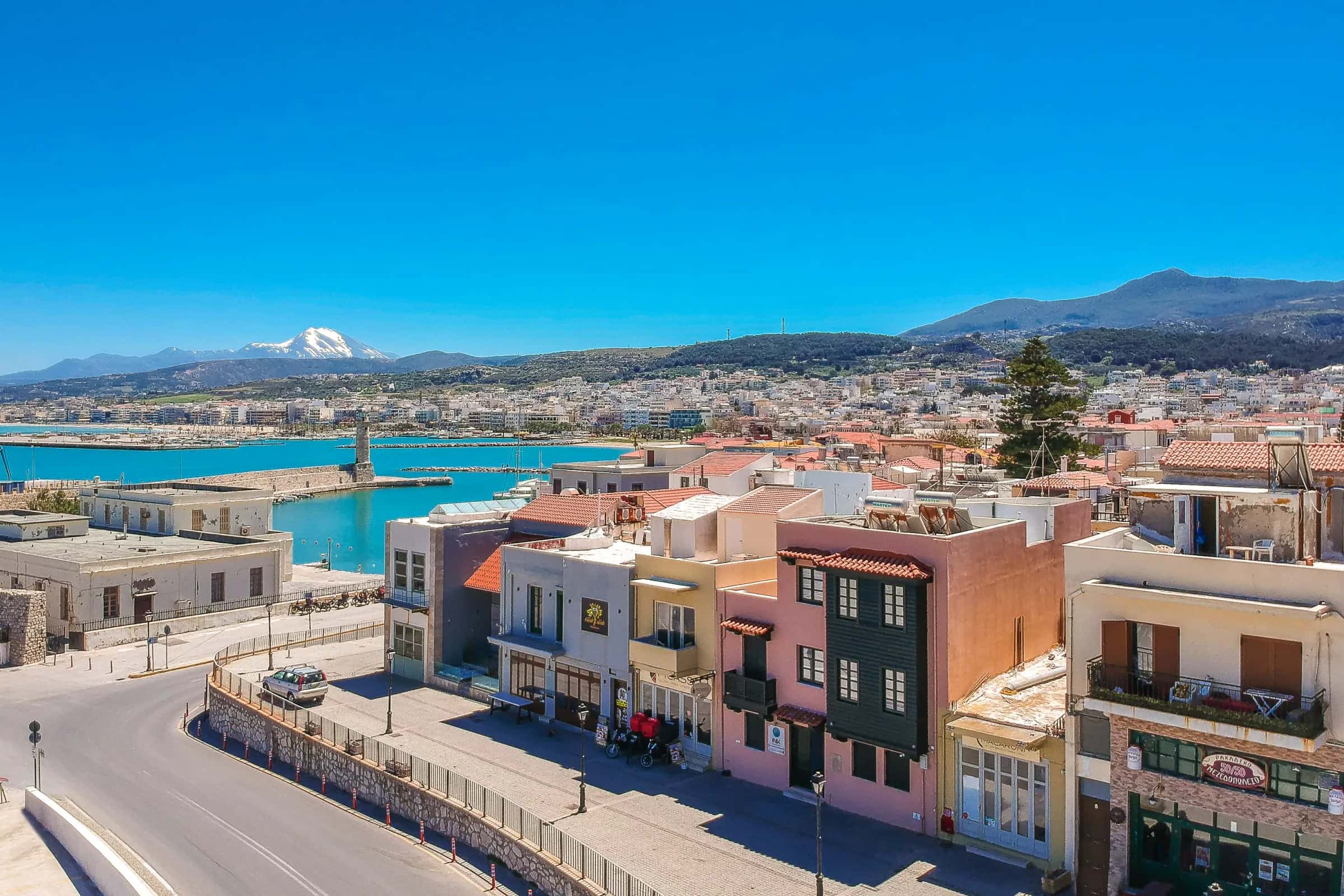
Rethymno sits halfway along the north coast of Crete, between Chania and Heraklion, with a mountain behind it and the Cretan Sea in front. Its old town is one of the best-preserved in Greece: nobody flattened it, so the Venetian doorways, the Ottoman fountains and the wooden balconies are still where they were put.
What that means for a stay is simple. You are not driven to attractions. You walk out of a door into the thing itself.
Chapter one
The old town
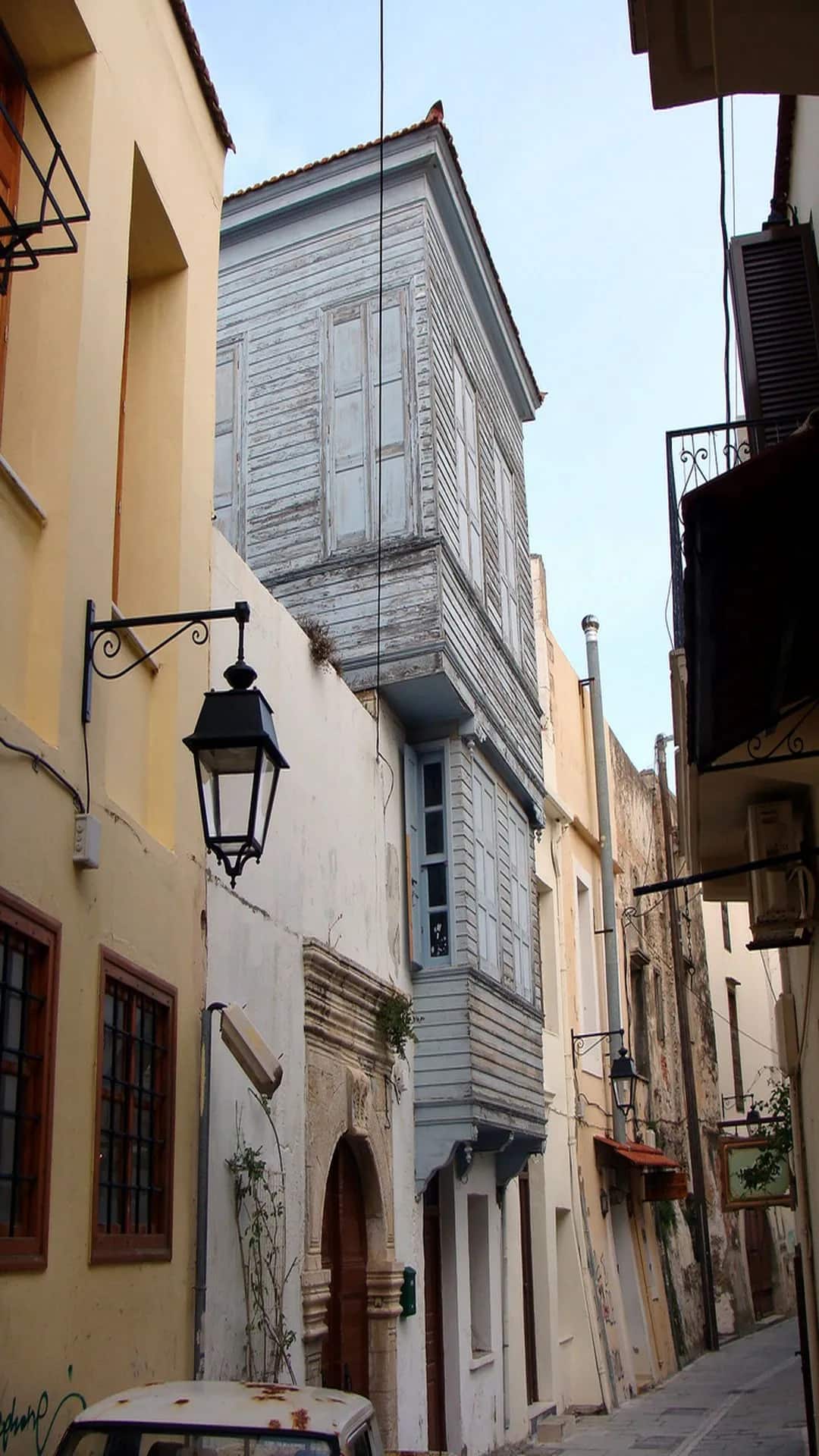
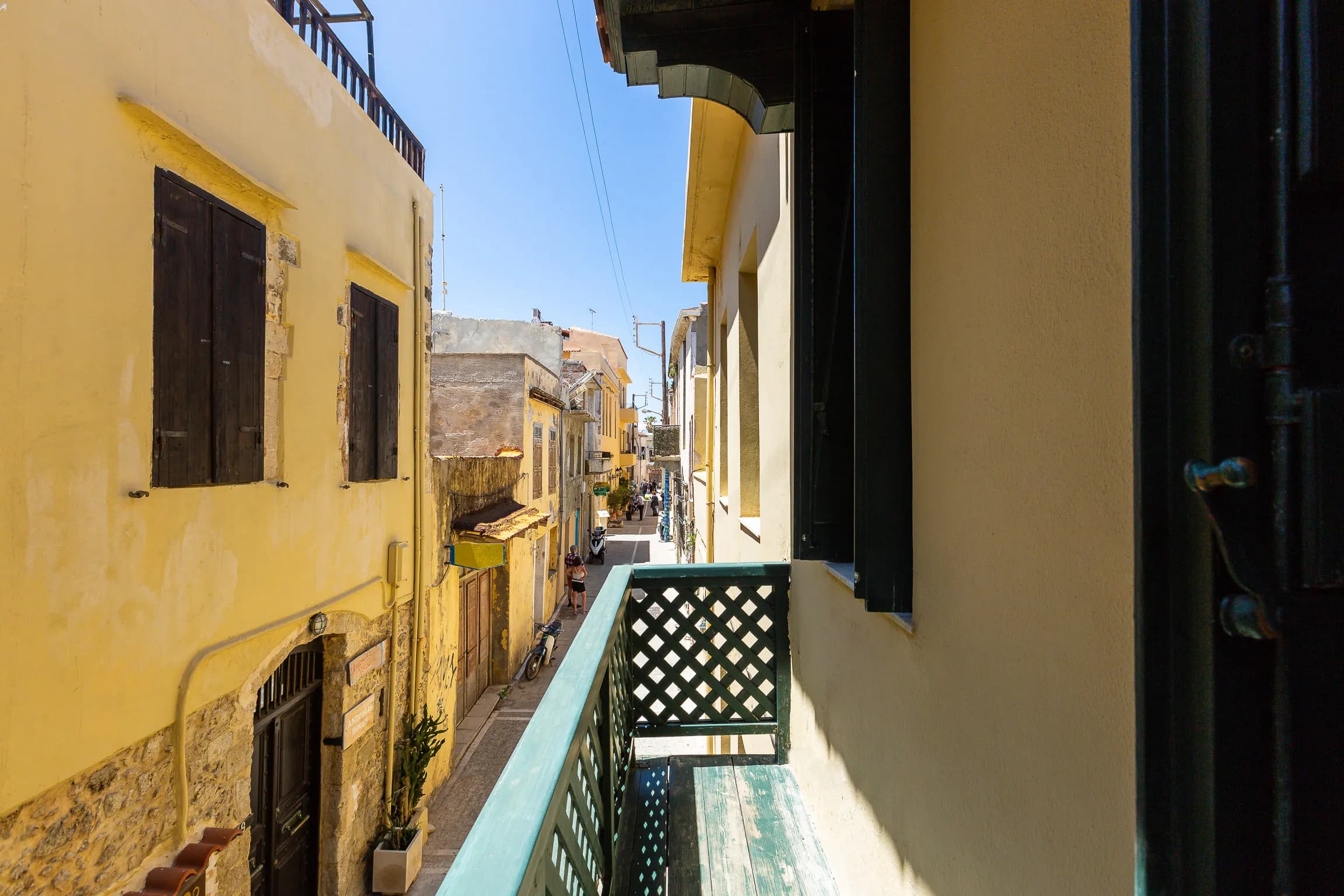
The quarter around Ink is a grid of lanes too narrow for cars, laid out by Venetians and lived in ever since. Doorways carry carved lintels four hundred years old. Bougainvillea comes over the walls in summer and drops into the street.
It is not a preserved quarter. People live here — laundry, cats, scooters, an argument two floors up — and that is precisely what makes walking it at eight in the evening better than any excursion.
- From the door
- You are already in it
Chapter two
Venetian stone
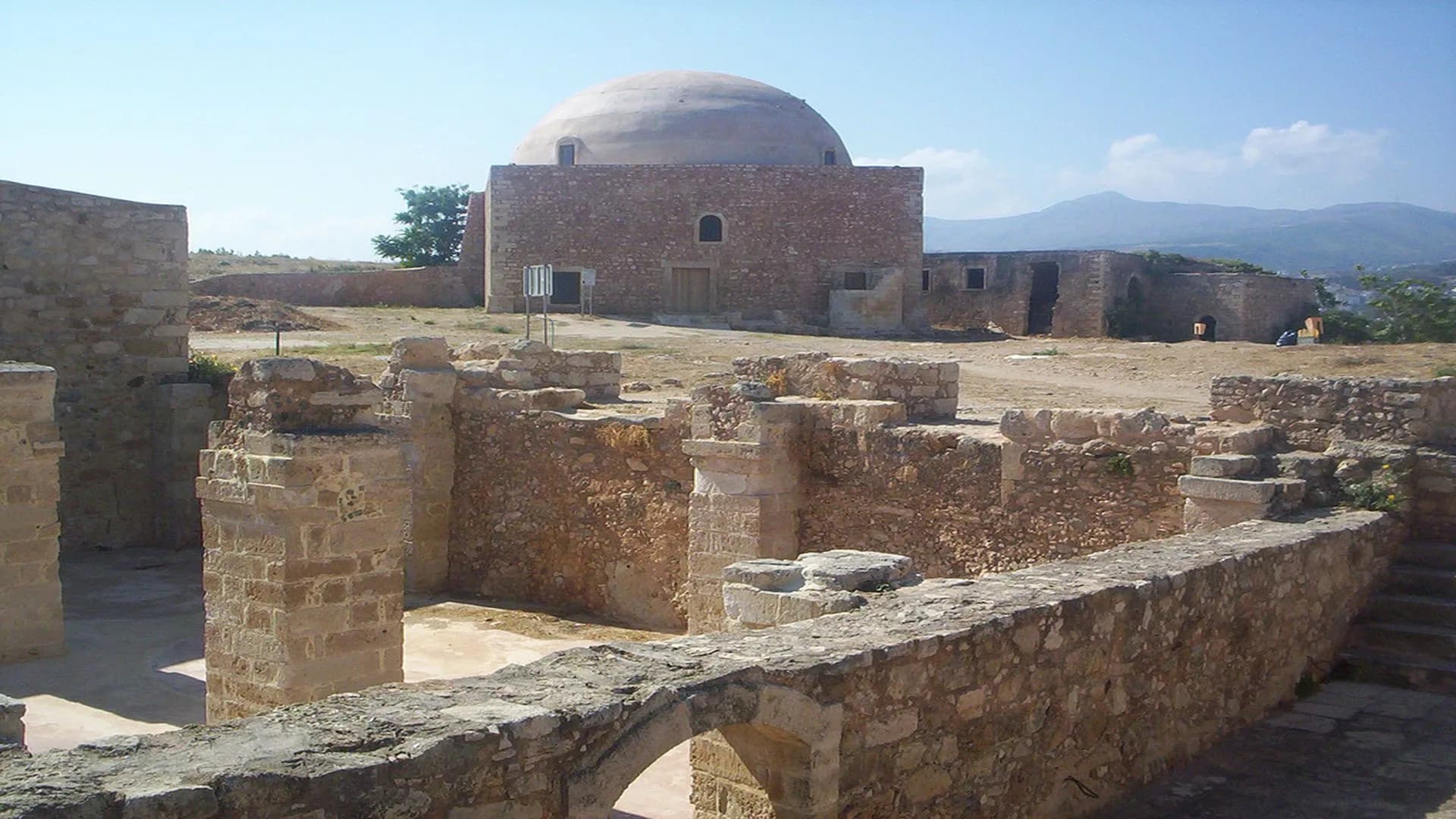
The Fortezza stands on the hill of Palekastro above the town, built in 1573 on the site of the citadel of ancient Rithimna and the temple of Artemis Rokkea. Its walls run 1,300 metres, with four bastions — St Luke, St Elijah, St Paul and St Nicholas.
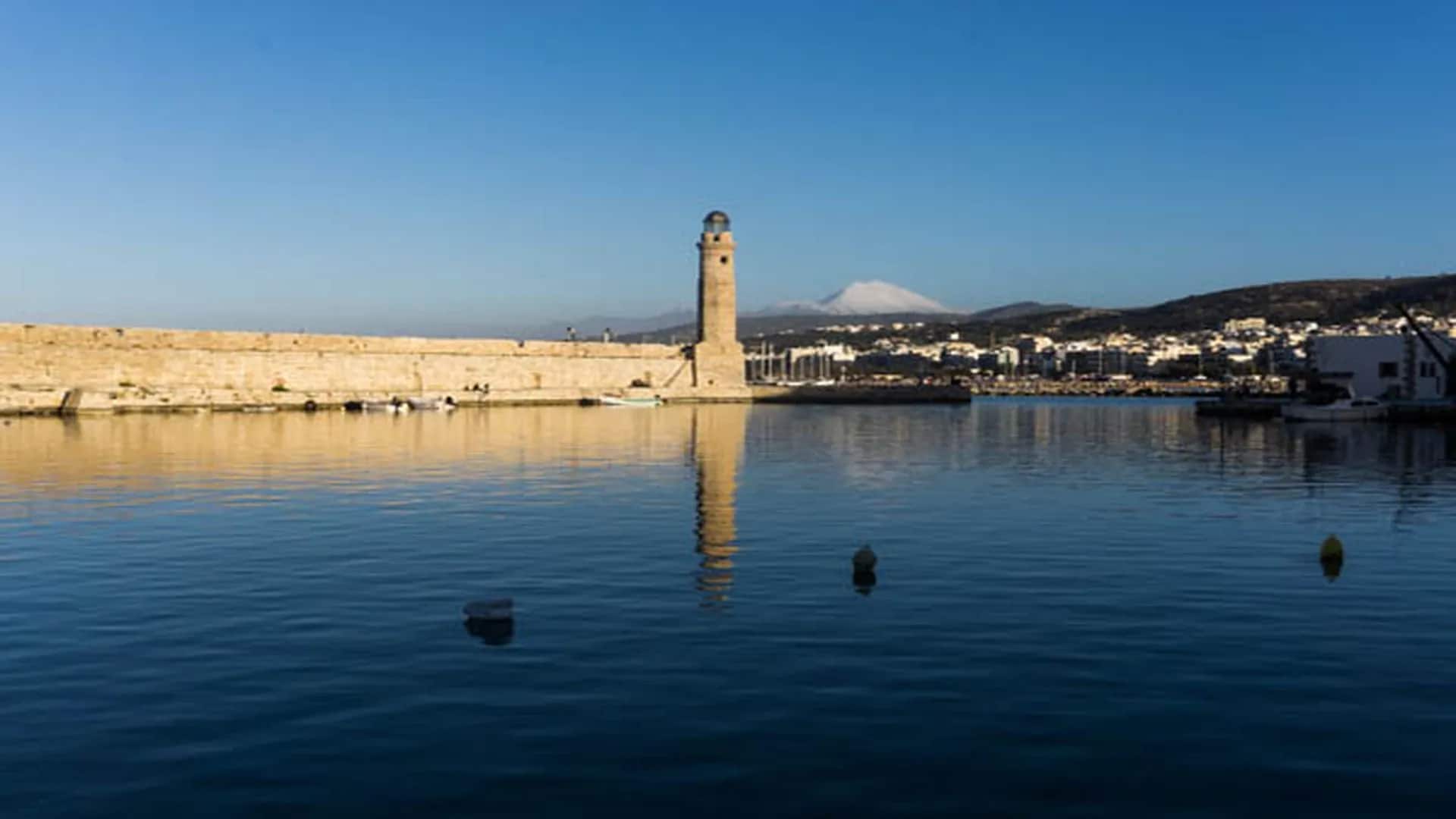
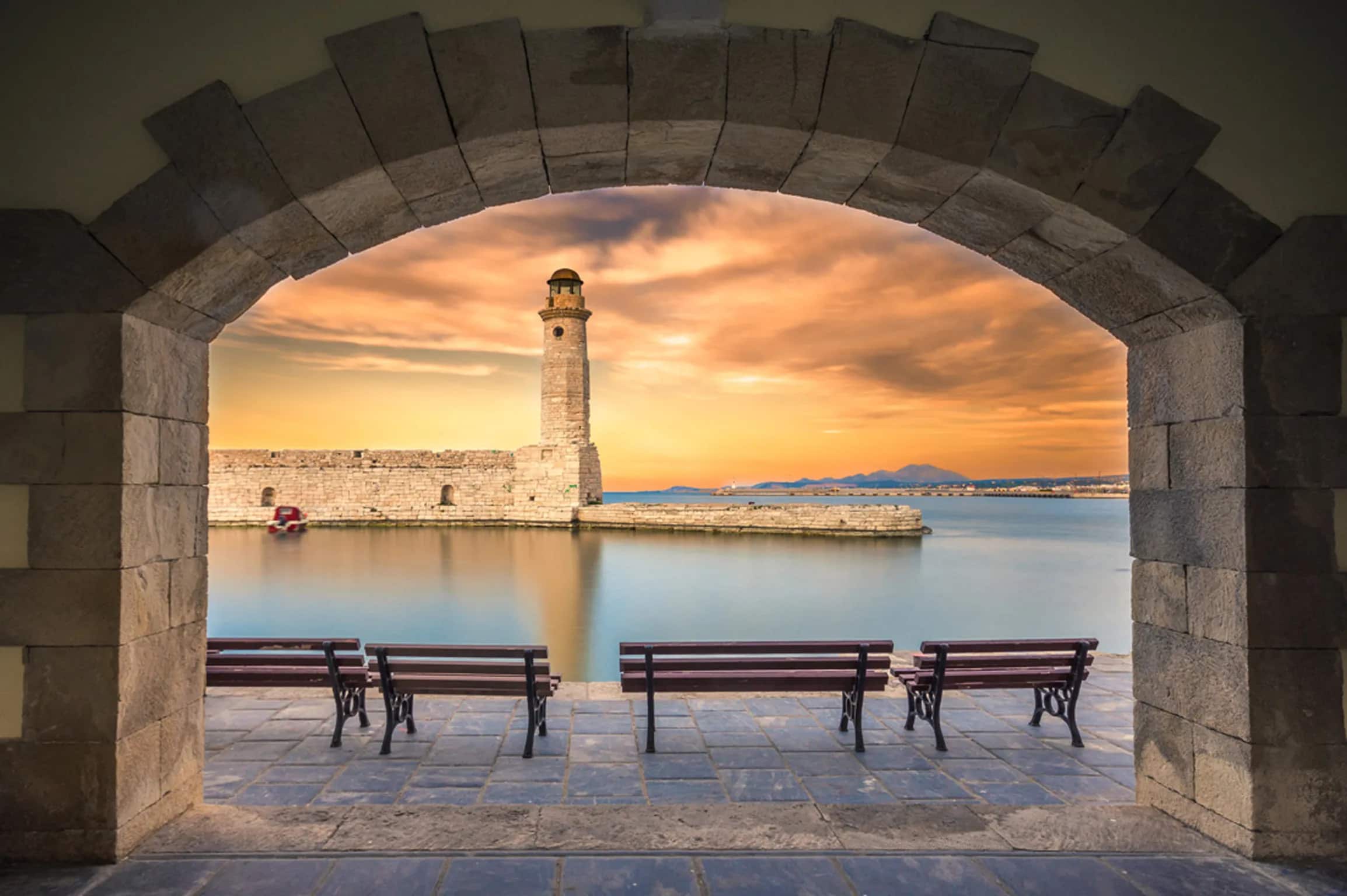
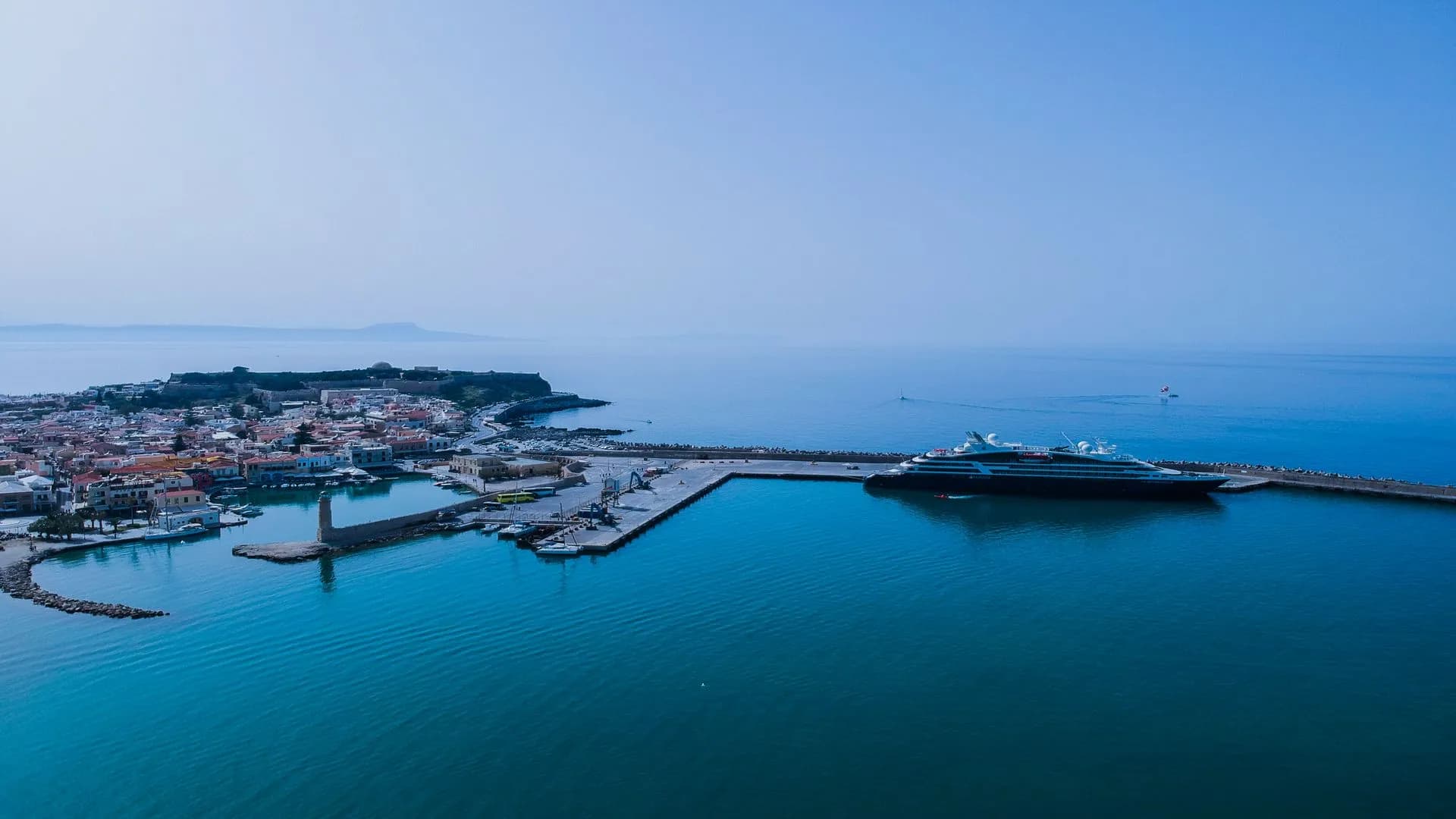
Below it the Venetian harbour curls behind its Egyptian lighthouse. It worked in the Byzantine period, after 961, and flourished under the Venetians, who began major works in the 14th century against the silting that troubles it to this day.
- Fortezza
- Built 1573 · 1,300 m of wall
- Harbour
- In use since the 10th century
Chapter three
The water
The nearest swimming is the town's own beach, a few minutes' walk from the door: it begins where the old town ends and runs east for kilometres — sand, shallow water, and enough of it that August never quite fills it. You can be in the sea before breakfast and back for it.
The better swimming is further out, in coves reachable only by boat, and on the south coast where the water changes colour entirely. A boat can be taken privately for a day. The desk arranges it.
- Town beach
- A few minutes on foot
- Koumbes beach
- 1.6 km from the Residence
Chapter four
What Crete eats
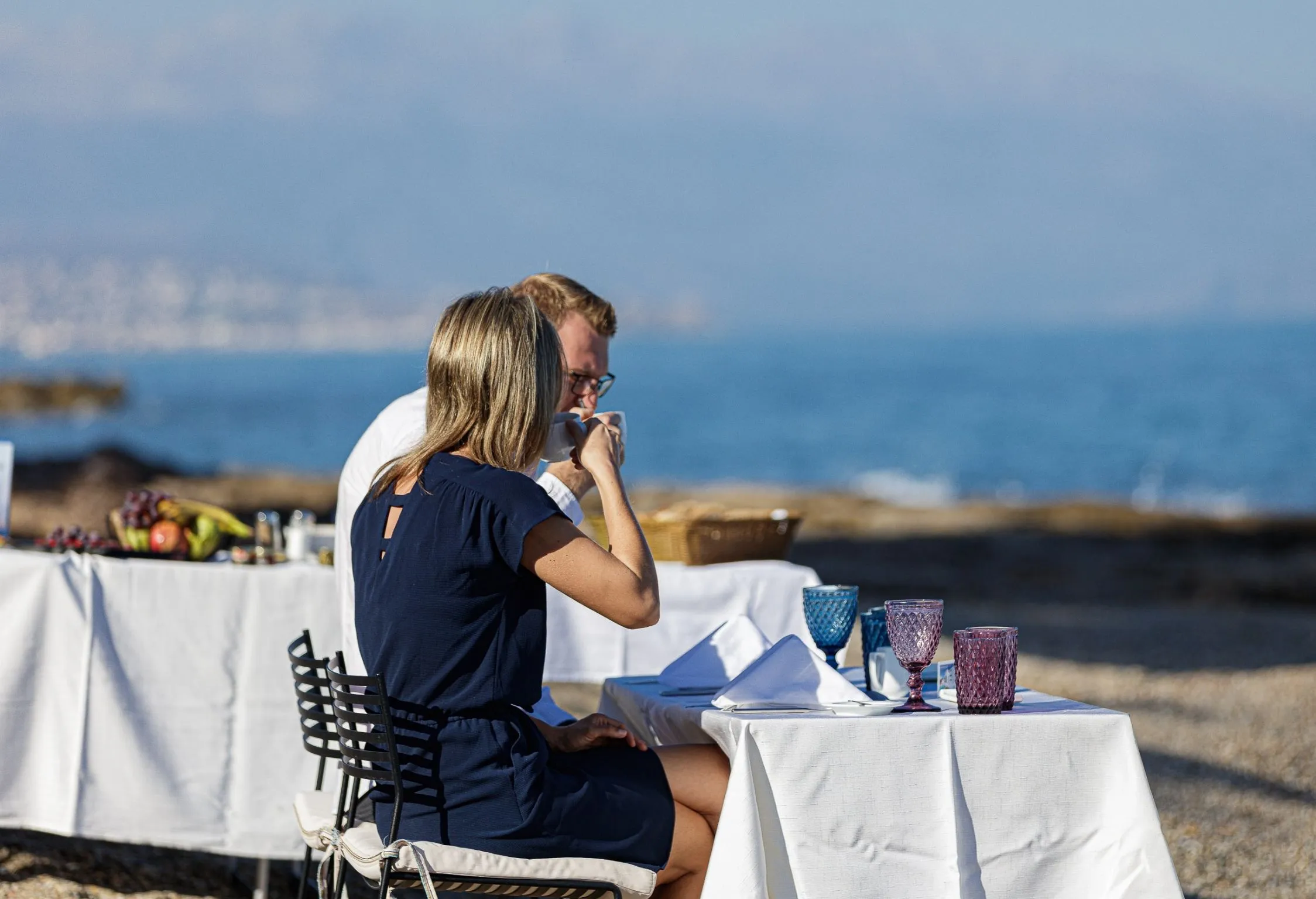
Cretan cooking is the oldest argument in favour of the Mediterranean diet, and it is not a health regime here — it is lunch. Wild greens, sheep's cheese, barley rusk, olive oil poured like it costs nothing, and lamb cooked slowly with whatever grew nearest.
The wine of Crete is famous worldwide, and the wineries in the hills behind Rethymno will show you how it is made. Closer to home, there are small luncheonettes in these lanes doing fresh salads and juices, and bars that make the best frozen cocktails of the summer.
- Breakfast
- Local cooking, at House of Europe
- Arranged
- Wine tasting, a farm
Chapter five
Behind the town
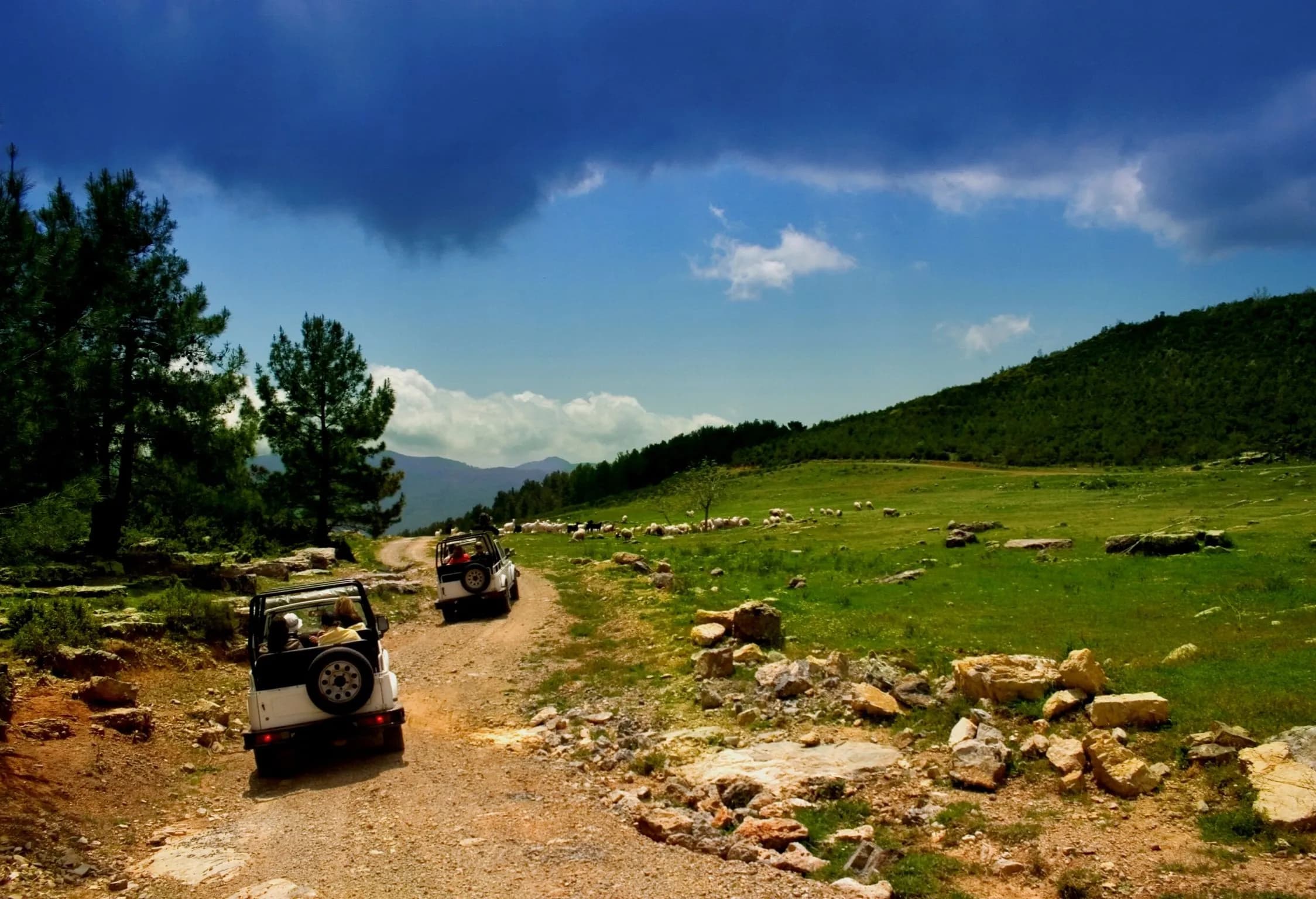
Twenty minutes inland the coast stops mattering. Gorges open, villages sit at the end of single roads, and the mountains run up to snow that lasts into May.
Arkadi Monastery is 23 kilometres east, built at 500 metres on a plateau of olive groves, vineyards, pine, cypress and oak, with the Arkadi gorge beginning below it. Further on, the Museum of Ancient Eleftherna — the first museum in Crete built inside an archaeological site — carries the whole history of the place from 3000 BC to 1300 AD.
South, the Kourtaliotiko gorge cuts down to Preveli, where a palm-lined river runs into the sea. That one is a day rather than an afternoon, and we arrange it with Routes, the family's own excursions company.
- Arkadi
- 23 km east · 500 m altitude
- Eleftherna
- 3000 BC – 1300 AD
- Kourtaliotiko
- A day trip, arranged with Routes
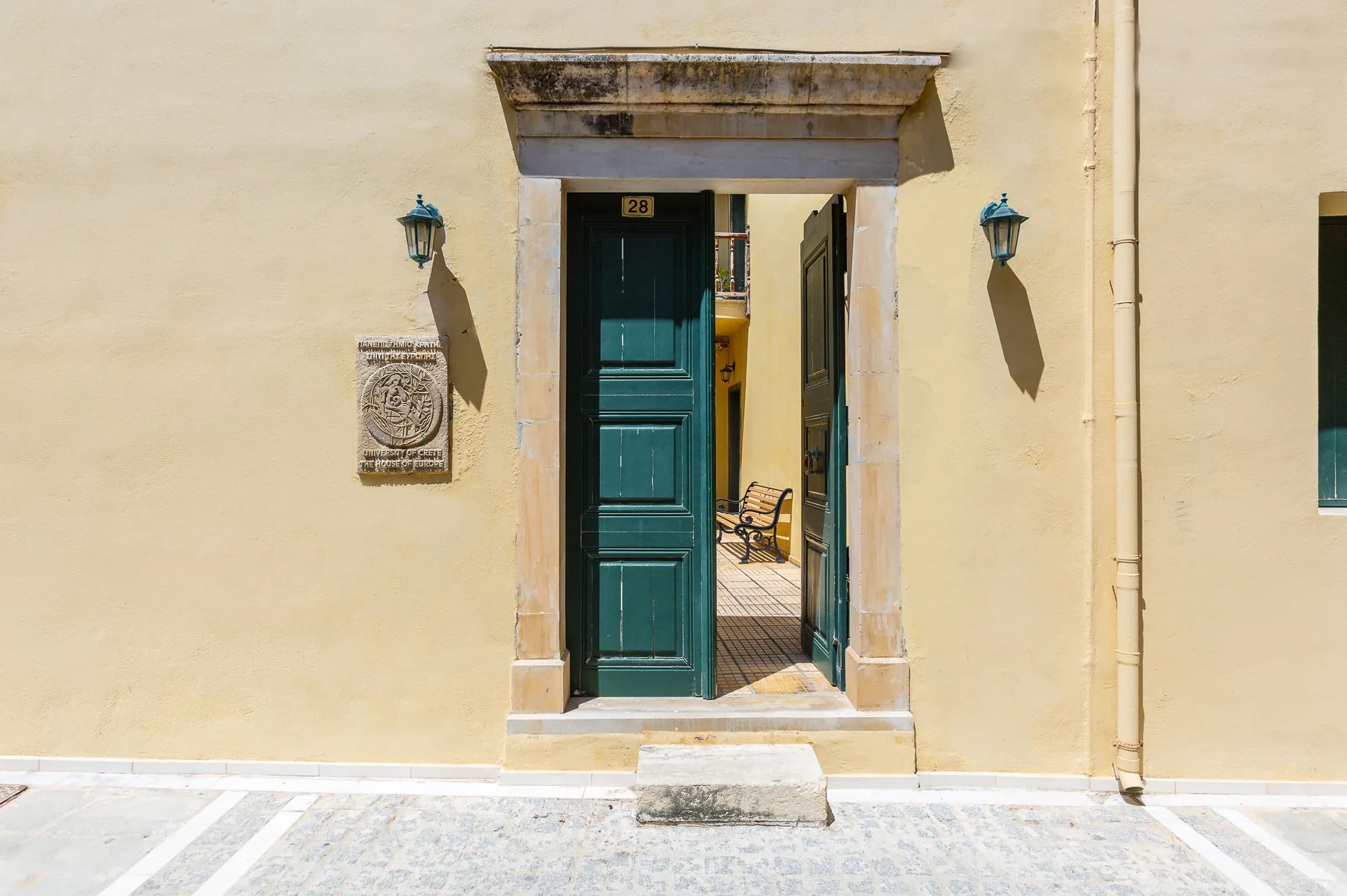
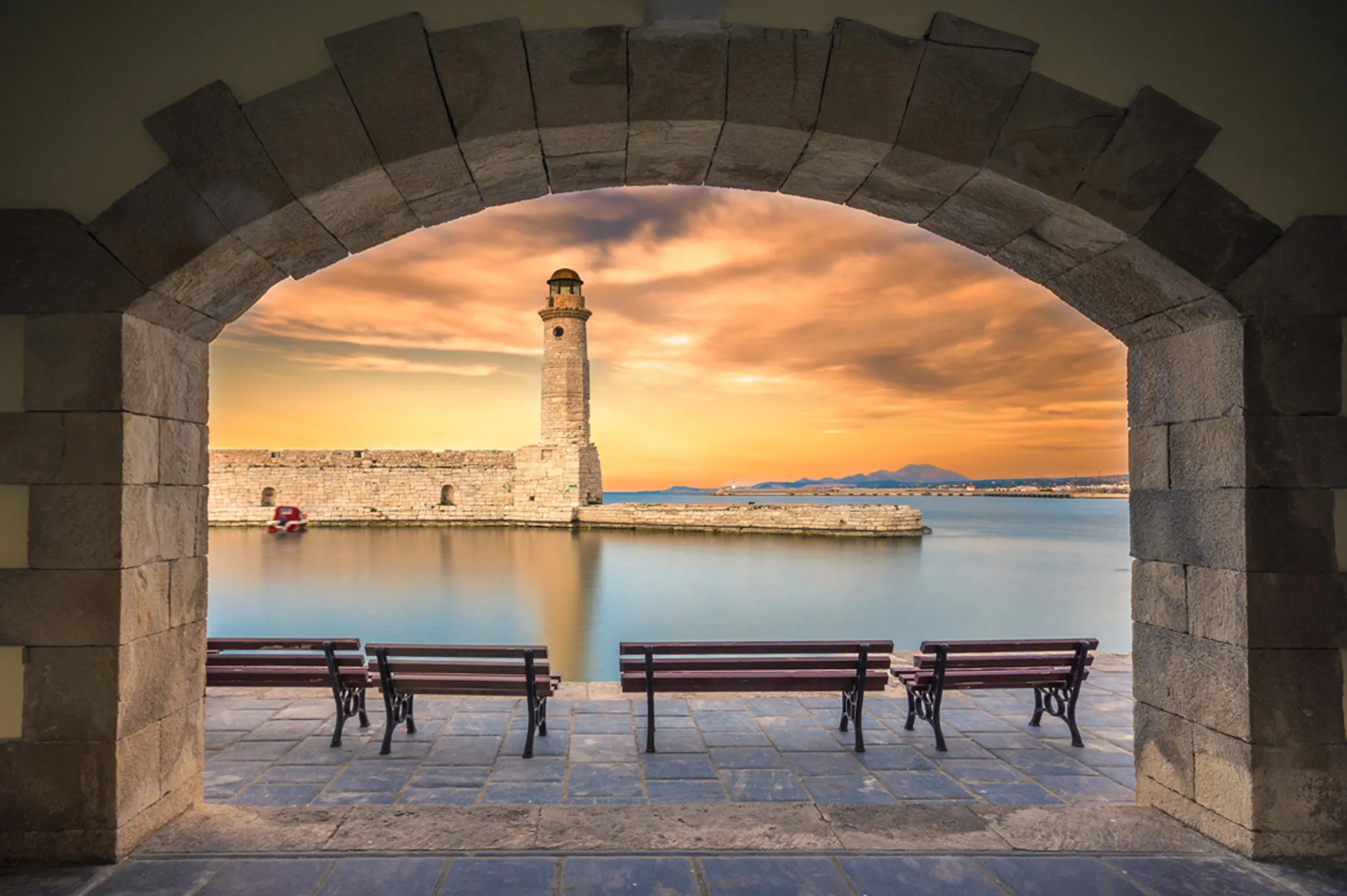
Four minutes from the door
The harbour, at the end of the day
What stands around you
Seven things worth the walk
The Town Beach
A few minutes on foot- The nearest swimming is the town's own beach, which begins where the old town ends and runs east for kilometres — sand, shallow water, and enough of it that August never quite fills it. It is a walk of a few minutes from the door, not a drive: you can go before breakfast and be back for it.
The Venetian Harbour
A few minutes on foot- Next to the modern harbour, with its Egyptian lighthouse, this is one of the most picturesque corners of the old town. It operated in the Byzantine period, after 961, and flourished under the Venetians, who began major works in the 14th century to hold back the silting that troubles it still. Seaside tavernas line the quay.
The Fortezza
A few minutes on foot- The fortress dominates the hill of Palekastro beside the old town, one of the largest of the Venetian era. It stands on the site of the citadel of ancient Rithimna and the temple of Artemis Rokkea. The great pentagonal fort was built in 1573; its perimeter runs 1,300 metres, and along the walls stand four bastions — St Luke, St Elijah, St Paul and St Nicholas.
Historical & Folklore Museum
In the old town- A Venetian mansion in the old town, a listed monument of the 17th century, houses the city's historical and folk museum. Five halls hold a permanent collection of traditional craft and folk art — and the museum's work protects the building itself.
Archaeological Museum
In the old town- The city's archaeological collection, in the former church of St Francis — a Venetian monastery church a few streets back from the harbour. The museum moved here in 2016 from its earlier home beside the Fortezza gate.
Arkadi Monastery
23 km east- Near the village of Amnatos, built at 500 metres on a fertile plateau of olive groves, vineyards, pine, cypress and oak. Picturesque chapels stand around it, and the Arkadi gorge begins from there.
The Museum of Ancient Eleftherna
Inland from Rethymno- The first museum in Crete built inside an archaeological site, standing beside the ancient city of Eleftherna. Its three halls carry the whole history of the place, from 3000 BC to 1300 AD, in everyday objects and works of art.
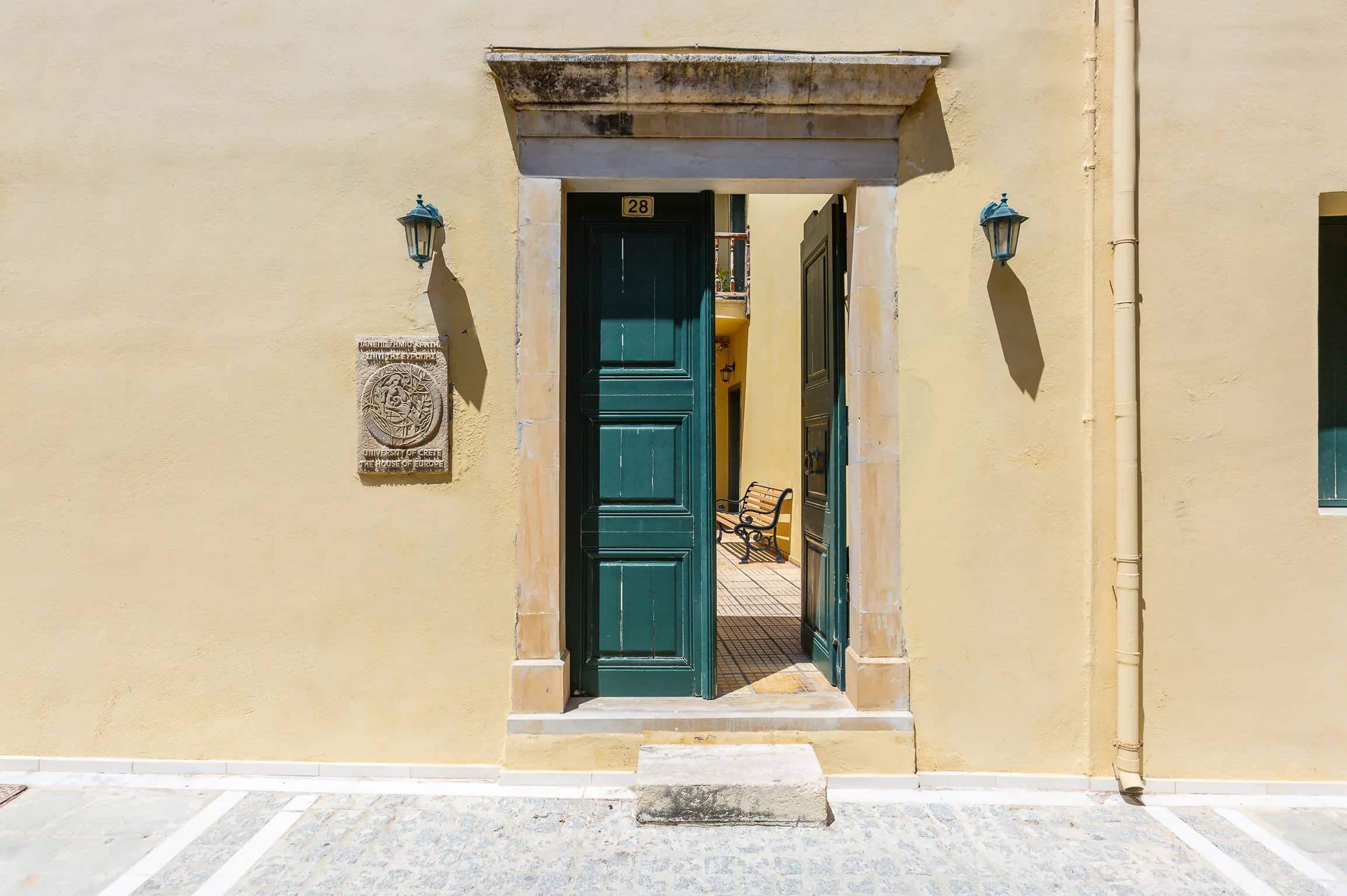
Arrival
You are met at one door
The hotel occupies two buildings in the old town, and a residence by the harbour. You come to one door — House of Europe, the first building, at Nikolaou Plastira 4 — and somebody walks you to your room from there.
Nikolaou Plastira 4 · Rethymno 74100
From the airport to the key
The whole arrival →The art of staying
The difference is the hours you spend outside it. Twenty-two arrangements — a boat of your own, a morning nobody else knows about.
At the TableΤραπέζι
Crete eats better than almost anywhere in the Mediterranean. These are the ways in.
On the WaterΘάλασσα
The coast is four minutes' walk away. Everything below begins from it.
Into the IslandΝησί
Gorges, mountain villages, monasteries, and roads that only go one way. Arranged for you.
For YourselfΗσυχία
Quieter arrangements, made in your own time.
From the account
@ink_hotels ↗